Indoor playgrounds are a growing trend because they play areas are getting to be a boon for childcare for companies, helping kids blow off energy while holiday shopping from the mall, or working as a way for daycare to maintain kids focused.
But where did the thought of indoor playgrounds result from? How did indoor playground equipment develop or come to be? Let's check out the background of indoor playground equipment.
The Initial Indoor Playground
The 1st indoor playground is probably a whole lot over the age of you might expect. The first recorded indoor playground might be traced returning to a gymnasium in Germany in the 1920s, where ropes, bars, and ladders were put in place for children to climb on.
Kids being kids, they loved crawling, climbing, and exploring and jumped in. The achievements this would cause the idea spreading across Europe.
The Adventure Playground in California
This trend was mostly a European idea prior to its strategy to the United States in the 1950s with the opening from the Adventure Playground in California, recognized for its wooden structures and open-ended play.
However, the thought didn't catch on as fast as many thought it might.
The 1980s Indoor Playground Revolution
However it wasn't before the 1980s that indoor playground equipment really took off, thanks in large part to your company called SoftPlay, founded by Bill Kitchen. SoftPlay was among the first companies to create modular soft playground equipment, bringing their items to malls across America and popularizing the thought of indoor playgrounds.
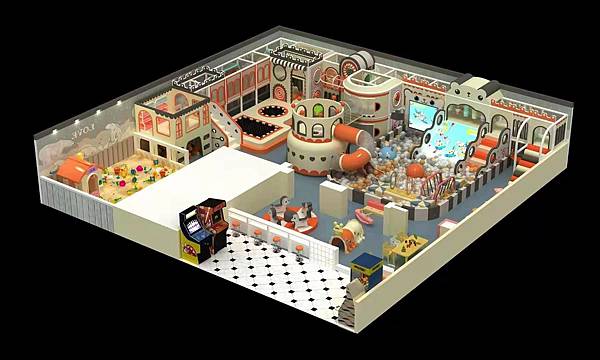
The Growth of Soft Play Structures
In the late 1990s, a new trend in indoor playgrounds emerged: soft play structures. This shift was largely relying on a mix of safety concerns and advances in technology that allowed for the development of large, colorful, and dynamic soft play structures.
These playgrounds often feature different themed areas, from pirate ships to castles, with slides, ball pits, and climbing structures. The mixture of safer spaces that had been padded and made kids far less vulnerable to injury and the bright colors and imaginary themes made them incredibly well-liked by kids and parents alike.
What's the near future?
Today, indoor playgrounds carry on and evolve and present new and exciting methods for kids to try out and explore within a safe environment. Since malls are less frequent in lots of places, as is also at-work daycare, the demand isn't quite up to these was once.
Most of the same structures or designs are actually used for "Sheltered Outdoor Play Spaces" where rubber padding takes the area of gravel or sand with outdoor playgrounds that increasingly have these put in place underneath shaded areas to deliver shelter from heat and sun.
These blurred lines might be the way forward for "indoor" playground equipment, but there's no doubt it will continue to find its niche.
Today, indoor playground equipment from https://bestonamusementrides.com/ will continue to evolve with advancements in safety and design, offering endless opportunities for imaginative play. So the next occasion you take your kids for an indoor playground, look at the past and evolution that triggered those colorful structures and slides.

請先 登入 以發表留言。